
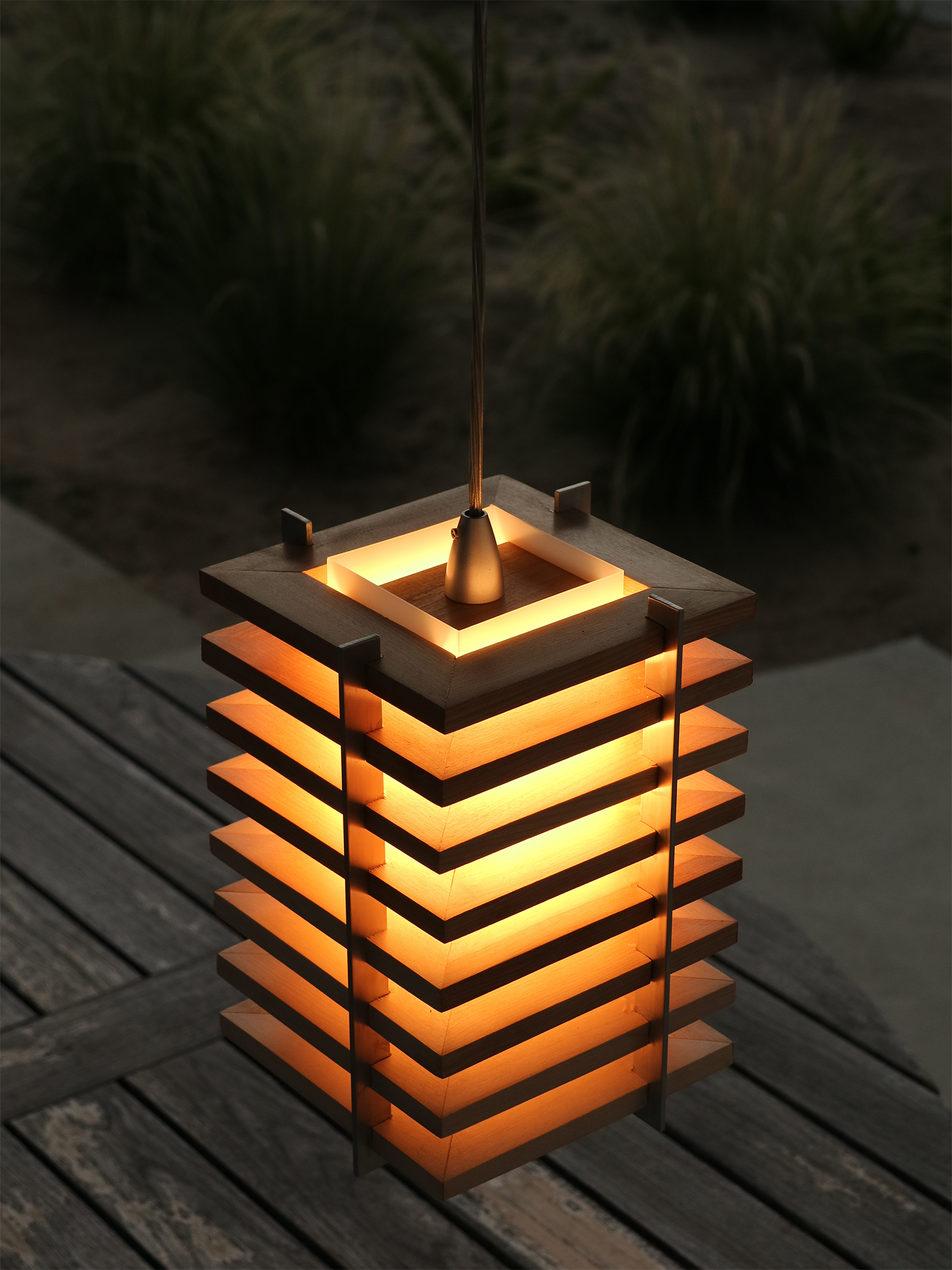
For Armen, Studio Other Industrial Designer, good design doesn’t need to be complicated to make an impact. Inspired by the “less is more” philosophy, Armen designed and fabricated a minimalist light fixture as the final project for a college woodshop course. Built from birch, aluminum and acrylic, the piece explores repetition, symmetry and thoughtful craftsmanship—while marking an early moment that helped reinforce his path toward industrial design.

How did this project first come about?
This was my final project in an introductory woodshop course I took in college. The goal was to design and fabricate a finished product using various materials while paying special attention to joinery and overall craft. While projects could range from cutting boards and clocks to mechanical toys, I decided to design a functional light fixture.
What kinds of designs are you drawn to?
I’m fond of designs that are not only visually appealing, but also require a high level of care and attention to detail to build. I’ve always admired engineering and design icons like the Porsche 911, with its rear-mounted engine housed within such a sleek, curvaceous form, or the Eames Lounge Chair, with its molded wood-veneer shell and plush leather construction.
To me, a design is successful when the finished piece can continue to evoke emotion and remain recognizable years after it was created.
What inspired the design of your light fixture?
I’m a proponent of the “less is more” philosophy. I believe good design doesn’t need to be overcomplicated to be impactful; at its core, it should be effective and harmonious.
I wanted the light fixture to reflect that philosophy through uniformity, repetition and symmetry.
How long did the project take?
Approximately eight weeks, from the initial design brief through the final presentation.
What materials did you use?
Birch wood panels, 1/8-inch aluminum strips and 1/16-inch acrylic sheets.
Walk us through the building process.
The finished fixture is composed of eight repeating wood squares joined by aluminum strips, surrounding a central acrylic shade that diffuses an interior LED light.
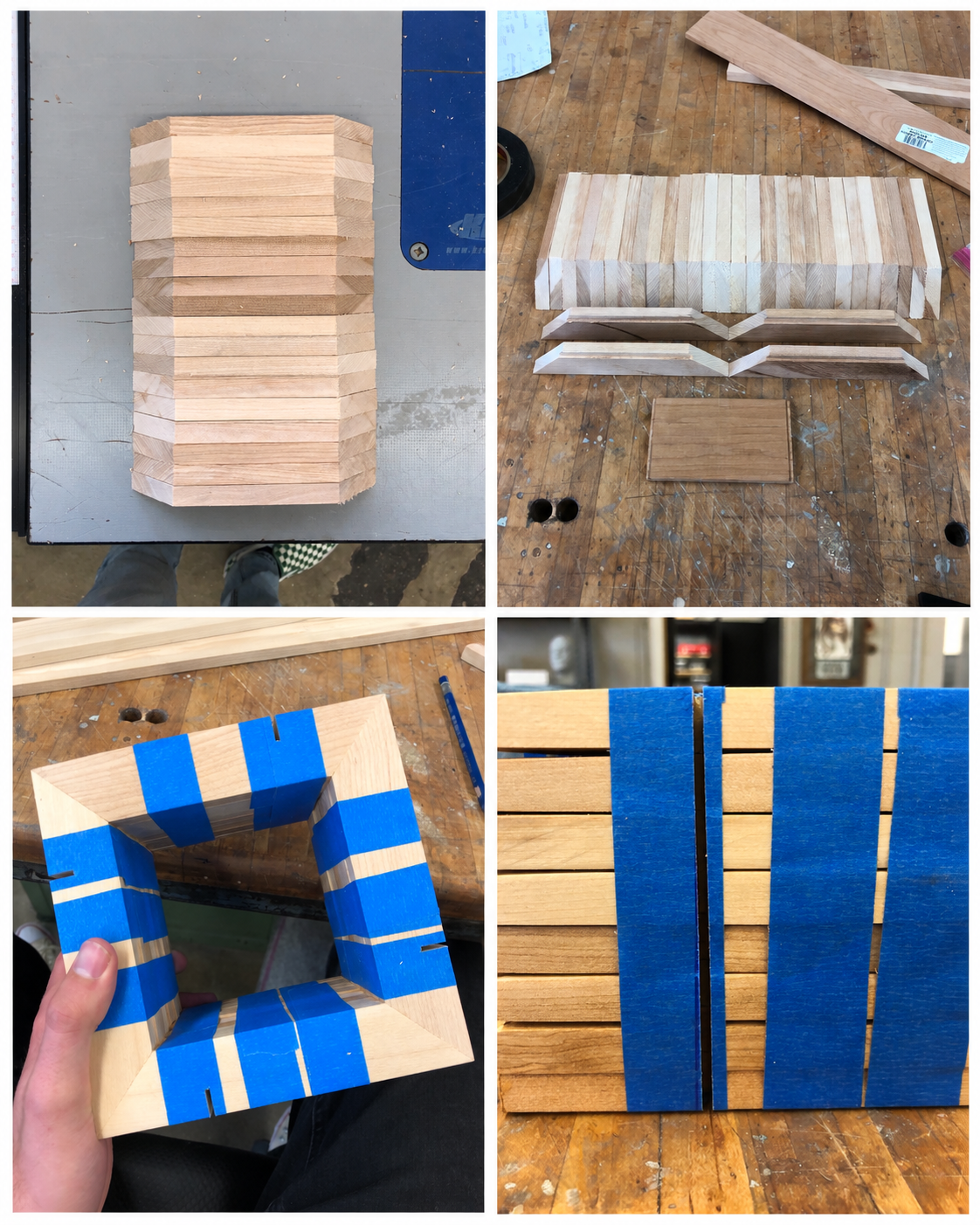
I started by running the birch through a table saw to bring the pieces down to size. Each of the eight square frames was made from four equal-length pieces cut at an angle and joined with mitered corners. I also created a small panel to hold the LED light, which interlocked with the top square through a thin channel routed into the wood.
From there, I switched to manual tools, bonding the mitered pieces with wood glue and using clamps to hold everything in place. Once the frames were assembled, I ran the pieces through the table saw again to create channels sized to fit the aluminum strips snugly. To make the design a little less predictable, I positioned the strips slightly off-center rather than placing them directly in the middle.
The wood pieces were then sanded and stained. I cut the aluminum strips to length using a metal band saw and scored the acrylic sheet so it could fold into a shade around the LED light. The final stage was bringing each component together and making sure the overall composition felt cohesive.
What was the greatest challenge?
While the project might seem relatively simple from a distance, it demanded a lot of dedication and attention to detail. Because the design is so minimal, there aren’t many places for imperfections to hide. Every component needed to work together seamlessly.
This was also an early student project, so I was still learning how to take a concept all the way through fabrication within a set timeline. Looking back at the final piece now, I can spot a few small imperfections—a slight misalignment here or some visible glue there—but overall, I’m very proud of how it turned out.
What has stayed with you most from the project?
I still remember my one-on-one presentation with my instructor. His reaction to the design was incredibly encouraging, and it meant a lot to have my efforts recognized by someone with so much experience.
More than anything, his confidence in my future as an industrial designer helped give me confidence that I had a place in the field.


