
The Challenge (Accepted)
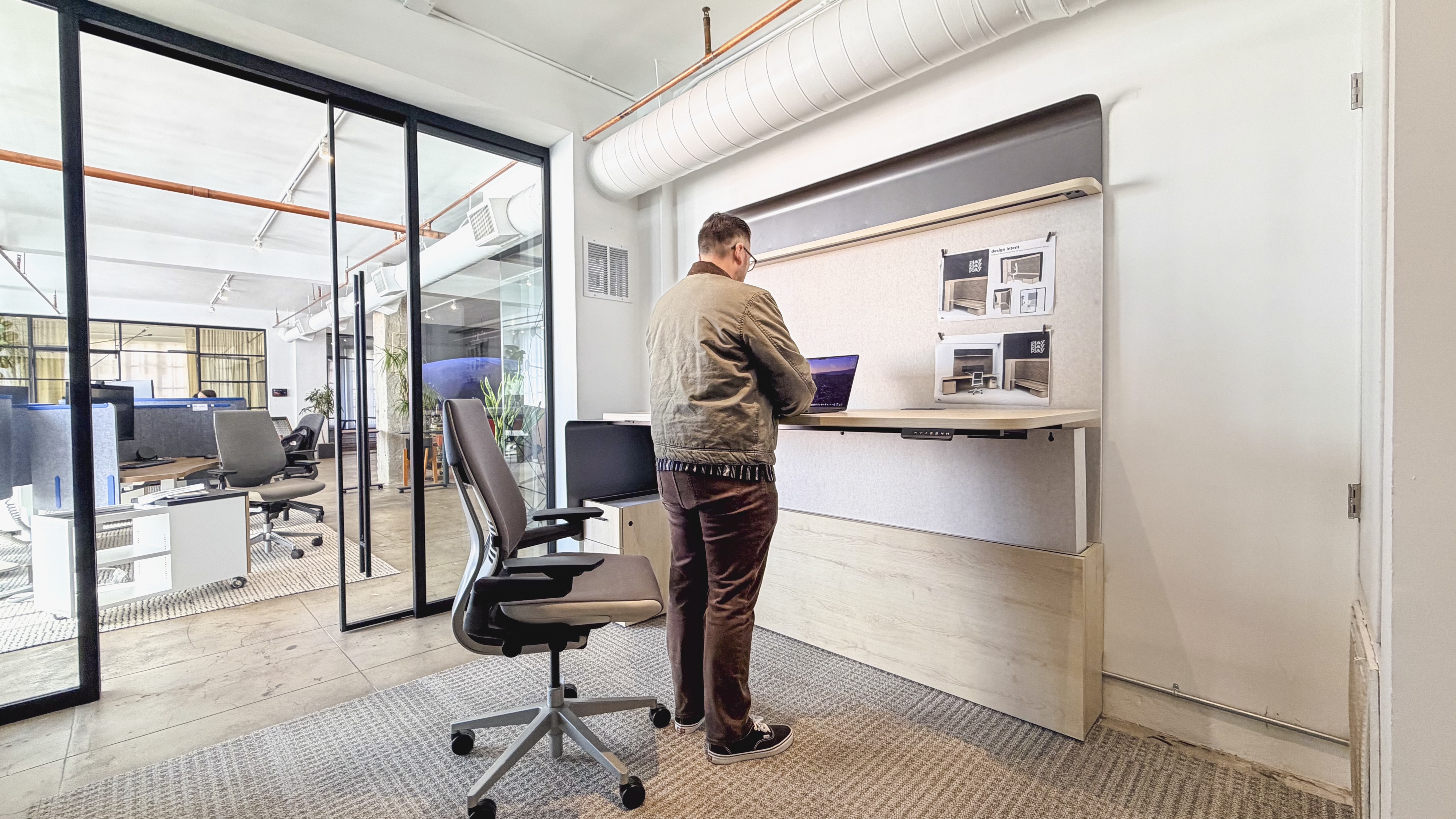
When the office gets smaller, every design decision must work harder. For Studio Other, that challenge became an opportunity to rethink the workstation from the inside out. With fewer people in the office on any given day and shrinking footprints to match, the traditional desk felt oversized and under-considered. The goal was clear but ambitious: design a height-adjustable work wall that could flex with changing work habits, conceal architectural constraints, and still feel intentional and elevated—all within a tight $2,000 budget.
This wasn’t just a theoretical exercise. The team wanted something they could live with, test daily, and refine in real time. The DTLA office became the proving ground.
The Approach
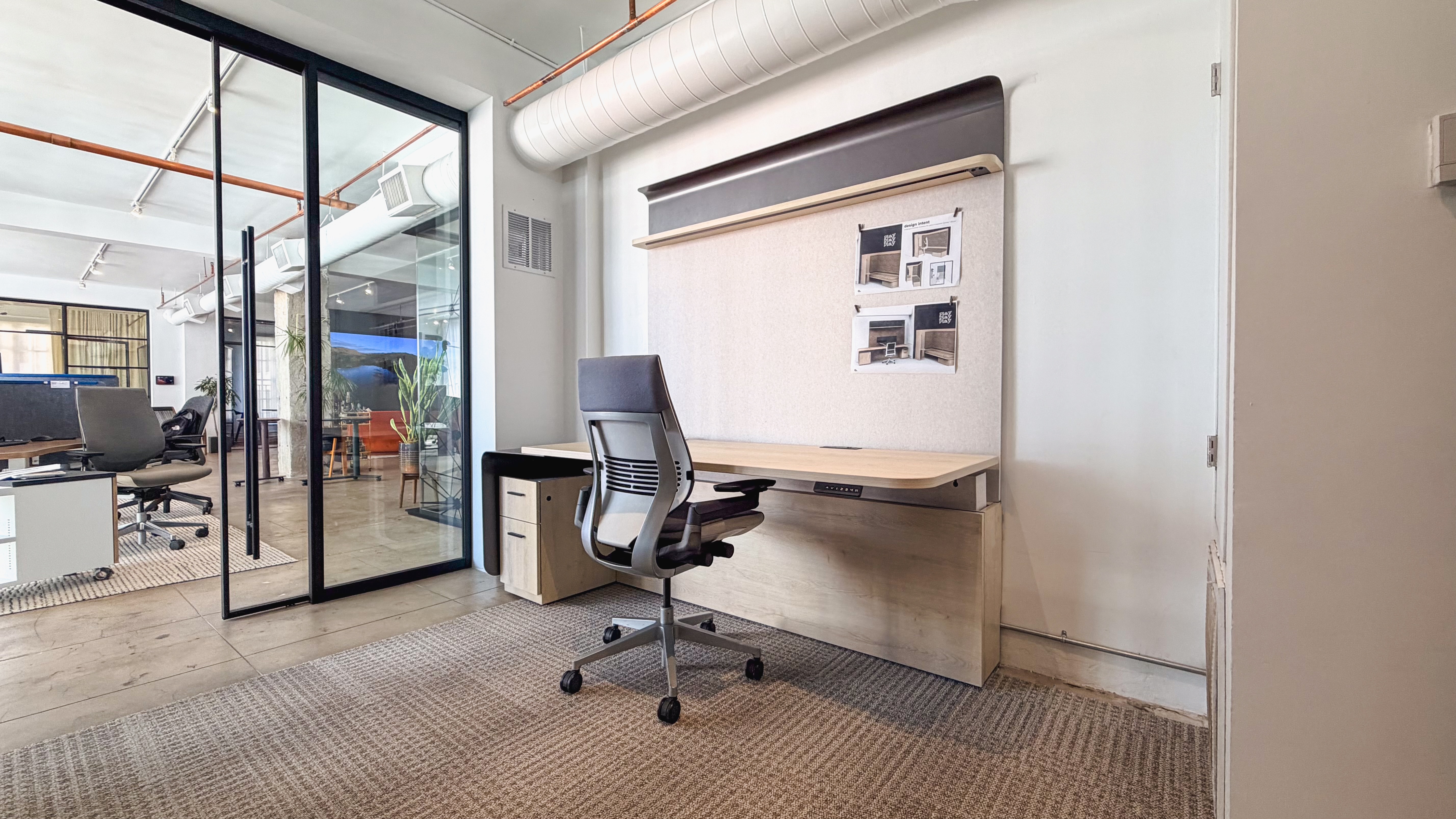
The solution began with a standard, affordable height-adjustable base—then Studio Other layered design thinking on top. The work wall was conceived as a single, integrated moment: part desk, part architectural element, part utility hub.
Because people aren’t in the office every day, the design prioritized immediacy. Storage was kept minimal but purposeful, with recessed surfaces carved into the pedestal for phones, keys, and daily essentials—quick-access moments that eliminate friction. A felt wire manager travels vertically with the desk, keeping cords tidy at any height, while surface power stays within easy reach. A discreet keyway slot allows users to remove the desk surface if needed—practical insurance for everything from power outages to dropped pens.
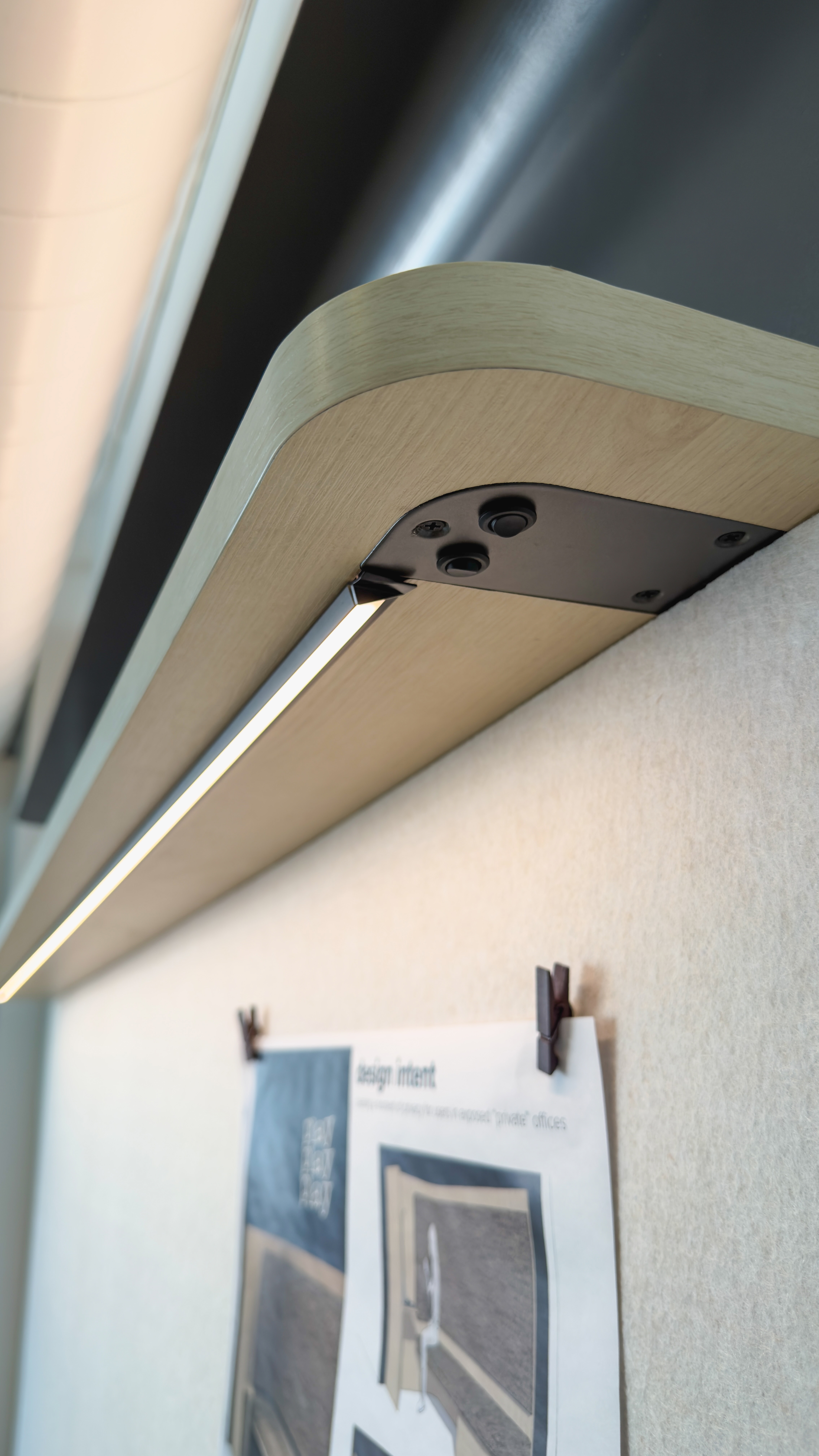
Visually, the team focused on dressing up the base without overcomplicating it. A rolled panel detail wraps the desk edge, creating a clean, sculptural exterior while softening the overall profile. That gesture carries upward to the shelf above, where a rolled fin detail mirrors the desk below, tying the composition together. The shelf itself adds both function and personality—space for personal objects, plants, or materials—while integrated uplighting and downlighting give the wall depth and warmth, elevating it beyond a purely utilitarian setup.
The work wall also quietly solves for the realities of older buildings. Columns are concealed, vertical felt panels help manage acoustics and cables, and the wall reads as intentional architecture rather than a workaround.
Built to Test, Built to Learn
Designed and installed for Studio Other’s own downtown office, the work wall was shaped through an internal workshop that surfaced real needs from the team. Three designers passed the concept hand-to-hand—each refining it before engineering stepped in to resolve the details. The result is a piece that feels considered but not precious, flexible but grounded.
At its core, the DTLA Work Wall is an exercise in restraint: proof that thoughtful design, not excess, is what transforms a standard solution into something special. By focusing on how people actually use the office today—and by pushing an affordable base to its fullest potential—Studio Other created a work wall that reflects the future of the workplace: adaptable, efficient, and quietly expressive.


